
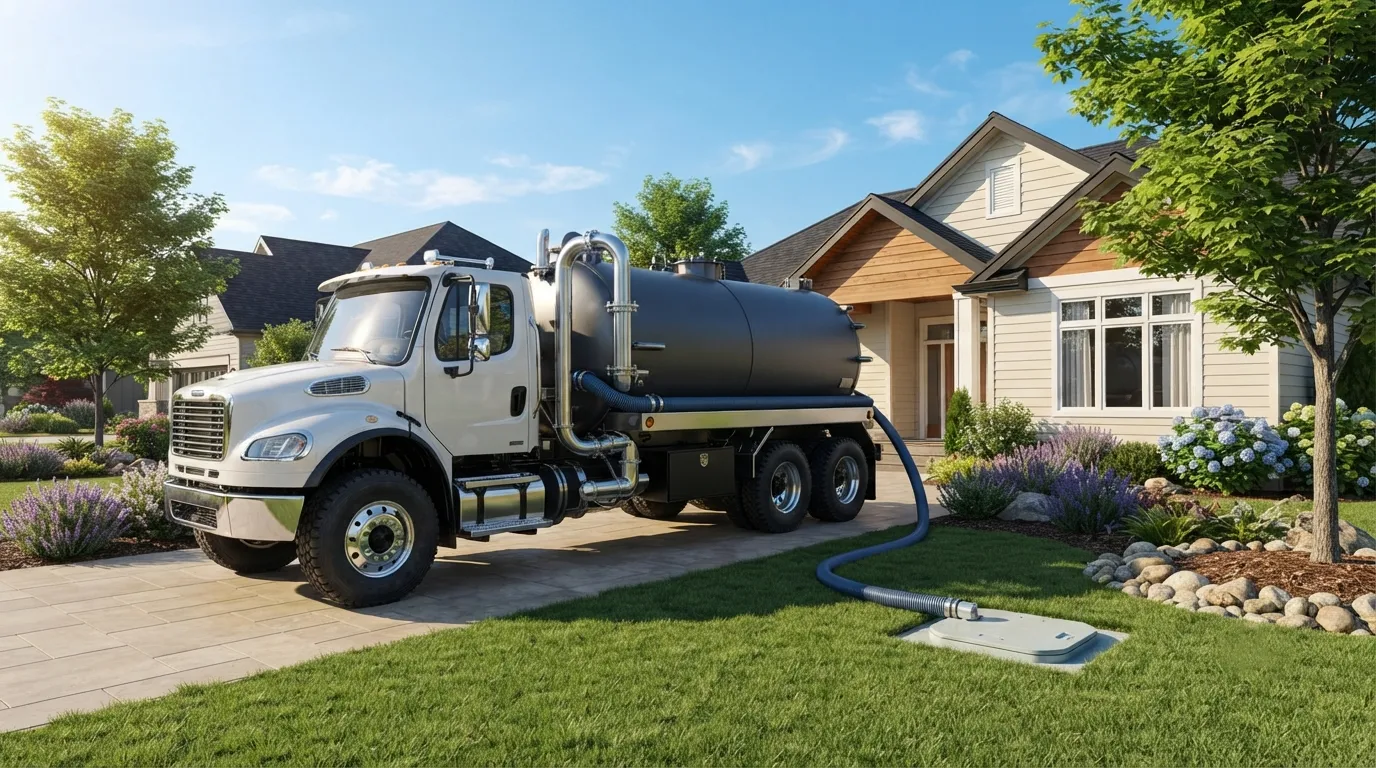
How Often Does a Septic Tank Need Pumping?
A residential septic tank is typically pumped every 3 to 5 years, and that range is driven by tank size and household size, not a fixed calendar date. A bigger household fills a tank faster, and a smaller tank fills faster regardless of who lives there. If you are unsure where your property lands, our how often to pump a septic tank guide breaks down the math by household size. Commercial kitchens are a different animal: a grease interceptor gets pumped once fats, oils, grease and solids reach 25 percent of the liquid depth, which can mean monthly or even weekly service depending on volume. We cover that separately on our grease trap pumping page. For construction sites or events with no septic connection at all, a holding tank rental or a bank of portable toilet rental units solves the same problem without touching the ground. Cincinnati properties on older systems, especially anything installed before modern tank sizing became standard, tend to need more frequent visits. When in doubt, get it looked at. A short inspection costs a lot less than a backed-up line into the house.
What Are the Warning Signs a Septic Tank Needs Pumping?
Slow drains in multiple fixtures at once, gurgling in the pipes, standing water over the drain field, and a sewage smell near the tank or lawn are the classic signs. Any one of these alone might be a clog. All of them together usually mean the tank is full. We cover the full list of symptoms on our septic tank warning signs page, including what separates a simple clog from a tank that is genuinely at capacity. Do not wait for the smell to show up before calling. By the time odor reaches the yard, solids have often already started moving toward the drain field, and that repair costs far more than a pump-out. If your system backs up on a weekend or during a holiday gathering, our emergency septic service line handles same-window response. For sites without a tank, like new construction or agricultural operations under field sanitation rules such as OSHA 1928.110, a temporary system avoids the guessing game entirely. We can pair a septic tank cleaning visit with a broader inspection if you want to confirm the whole system before selling a house or closing on one.

What Does a Septic Pumping Service Include?
A standard visit includes locating and uncovering the tank access, pumping the tank down completely, and a visual check of the baffles and liquid level on the way out. We are not just pulling liquid, we are clearing the solids layer that builds on top and the sludge layer that settles on the bottom, which is the whole point of the visit. Some households pair this with a full septic tank cleaning that includes a filter rinse if the system has one. Grease traps get a different protocol tied to the 25 percent fats-oils-grease threshold described above, covered in detail on our grease trap pumping page. If access is buried under landscaping or a deck, tell us up front. It changes the time on site and sometimes the price. For general questions about how any of this works day to day, our how do porta potties work page covers the sanitation side of the business, and our FAQ page covers scheduling and billing across all our services, not just septic.

How Much Does Septic Tank Pumping Cost?
| service | duration | low | typical | high |
|---|---|---|---|---|
| septic pumping | day | $150 | $250 | $300 |
| septic pumping | weekend | $50 | $150 |
Note: weekend septic calls run in the range of $50 to $150 above a standard weekday rate, reflecting the smaller pool of crews available outside normal hours. A 1,000 gallon septic tank pumping cost sits toward the middle of the day-rate band above for most Cincinnati households, with the final number shaped by tank size, access difficulty, and how much solid buildup has accumulated since the last visit. Larger tanks or systems that have gone longer than the standard 3 to 5 year window often land at the higher end. For a broader breakdown of what drives septic tank pumping cost, including how tank age and depth affect labor time, see our dedicated septic tank pumping cost page. If your project needs sanitation instead of a septic fix, our porta potty rental cost page and porta potty rental per day page cover pricing for that side of the business.
Do You Offer Holding Tank Service for Sites Without a Septic System?
Yes. A holding tank is not a septic system, it has no drain field, so it needs regular pumping on a schedule based on usage rather than natural breakdown. This is common on construction sites, remote properties, and agricultural operations where a permanent system is not practical or not yet installed. Our holding tank rental page covers setup and pumping intervals for that equipment specifically. For farm labor sites, OSHA 1928.110 sets a baseline of one facility per 20 hand-labor employees within a quarter mile walk, and a holding tank system paired with a handwashing station rental or portable sink rental can meet that standard for the season. Construction crews juggling a septic gap alongside general site needs often bundle this with construction site services, including temporary fence rental around the tank pad and a roll-off dumpster rental for demolition debris. If you are weighing a temporary system against a permanent tank install, ask us; we will tell you honestly which makes sense for your timeline.

Do You Handle Emergency Septic Calls?
Yes, we run emergency septic service for backups, overflows, and failed systems that cannot wait for a standard appointment window. A tank backing up into a house is not a schedule-it-for-next-week problem, and we treat it that way. Emergency response pricing sits in the weekend and day-rate service fee bands, and dispatch depends on how far the crew has to travel; Cincinnati calls get priority routing over farther jobs like Hamilton at 20.5 miles north or Mason at 22.3 miles northeast. Closer suburbs such as Norwood at 5.4 miles northeast and Fort Thomas at 7.9 miles southeast typically see faster arrival. If the emergency is really a sanitation gap rather than a tank failure, an emergency porta potty rental can bridge the time between the call and the permanent fix. We also run emergency response for disaster relief sanitation when flooding or storm damage takes a system offline entirely.
How much does a 1000 gallon septic tank pumping cost?
It typically falls within the day-rate band above, with the exact figure shaped by access, solids buildup, and how long it has been since the last pumping. Tanks that have gone past the standard 3 to 5 year interval usually cost more to clear. See our septic tank pumping cost page for the full breakdown.
How do I know if I need septic pumping or a repair?
Slow drains and gurgling pipes often mean the tank is full and just needs pumping. Standing water over the drain field or sewage odor that persists after pumping usually points to a repair issue. Our septic tank warning signs page walks through both scenarios.
Can you pump a septic tank same day?
Often yes, depending on crew location and how far the job sits from Cincinnati. Emergency calls get routed through our emergency septic service line, and closer suburbs generally see faster turnaround than farther towns.
What is the difference between a septic tank and a holding tank?
A septic tank treats waste and drains it into a leach field over time. A holding tank simply stores waste until it is pumped out, with no treatment or drainage. See our holding tank rental page for how that equipment works.
Do you service grease traps too?
Yes, grease interceptors are pumped once fats, oils, grease and solids reach 25 percent of the liquid depth, which is a different schedule than a residential tank. Details are on our grease trap pumping page.
What areas near Cincinnati do you cover?
We run septic service across Cincinnati and nearby towns including Norwood, Covington at 11.2 miles south, and Florence at 17.1 miles southwest. Check our service areas page or request a quote for your specific address.
Next step
Get a delivery date
Tell us the address, the dates and the headcount. We size the order and confirm the route.