
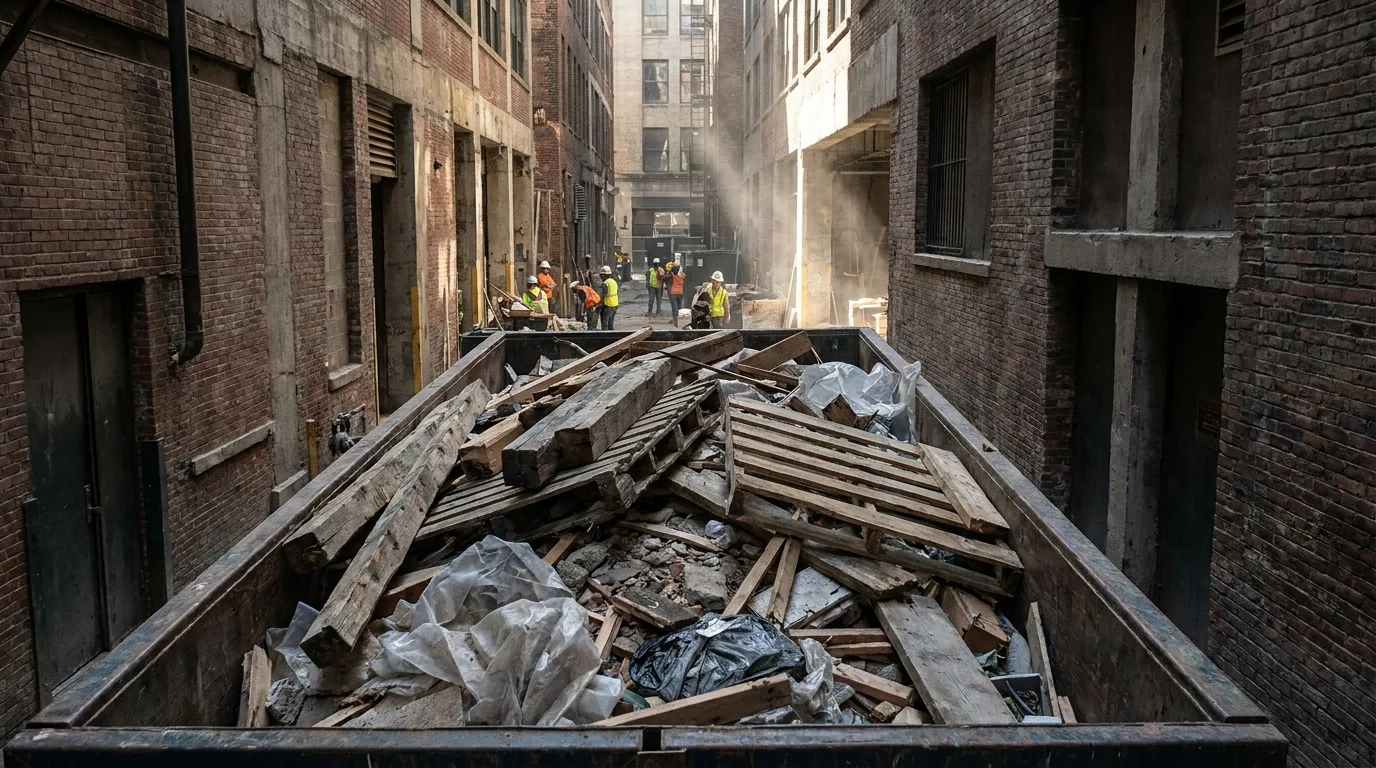
What items are banned from a roll-off dumpster?
Hazardous materials top the list, every time. That means liquid paint, solvents, pesticides, herbicides and anything with a hazmat label on the can. OSHA 1926.51(f)(1) covers washing requirements for workers applying paints, coatings, herbicides or insecticides, which tells you something about how seriously these materials get treated on a job site. Tires, car batteries, and lead-acid batteries of any kind are out too. So are propane tanks and fuel containers, full or empty, because trapped vapor can ignite during transport or compaction. Refrigerators, freezers and air conditioners usually need separate handling because of refrigerant. Medical waste, asbestos and any material labeled biohazard never go in a general dumpster. If you're clearing out a renovation and you're not sure whether old insulation or tile counts as hazardous, ask before you toss it. Cincinnati Porta Pros will tell you straight rather than let it become a problem at the landfill. For a full rundown by size, check dumpster sizes and dimensions or ask about construction dumpster rental if you're managing an active site with mixed debris.
Why does it matter what goes in the dumpster?
Because the landfill checks, and because overloaded or contaminated dumpsters cost more to haul. Every dumpster has a rated capacity, and dumpster weight limits apply whether you're filling a 10 yard or a 40 yard box. A load flagged for hazardous material at the transfer station can trigger extra fees, a delayed pickup, or a flat refusal to dump it, which leaves you holding a full container with nowhere for it to go. Housekeeping matters on a job site too. OSHA 1926.25 requires that scrap and debris get cleared from work areas regularly, and OSHA 1926.252 covers how waste materials get disposed of, including chutes and enclosures on multi-story projects. A dumpster full of banned material doesn't just risk a fee. It risks the whole load getting rejected and sent back, which means double handling and a wasted trip. That's expensive for a homeowner doing a home renovation porta potty project, and it's worse for a contractor running multiple containers across a Cincinnati job site.

What should I do with items that can't go in the dumpster?
Sort them out before delivery and plan for separate pickup. Paint and solvents typically need a household hazardous waste drop-off. Tires often go back to a tire retailer or a dedicated recycler. Appliances with refrigerant need a certified technician to reclaim the gas before scrapping. Batteries can usually go to an auto parts store or a scrap metal buyer. If you're running a septic project alongside your cleanup, note that a grease interceptor gets pumped once fats, oils, grease and solids reach 25 percent of the liquid depth, and that waste stream is handled by grease trap pumping, not a roll-off. A residential septic tank, separately, is typically pumped every 3 to 5 years depending on tank size and household size, which is worth knowing if your renovation touches the septic system too. See septic pumping service or septic tank pumping cost for that side of things. For general debris questions, dumpster permit requirements is worth a read before delivery day.
Can I get in trouble for putting banned items in a dumpster?
Yes. Contamination fees are common, and repeat violations can mean a hauler refuses future service. It's cheaper to sort upfront than to argue with a transfer station later.
| item category | where it goes instead |
|---|---|
| paint, solvents | household hazardous waste site |
| tires | tire retailer or recycler |
| batteries | auto parts store, scrap buyer |
| appliances with refrigerant | certified reclaim technician |
| propane tanks | propane retailer take-back |
Cincinnati sits within reach of several towns that run their own drop-off programs, including Norwood 5.4 miles northeast and Covington 11.2 miles south, so it's worth checking what's closest to your job before you load anything questionable into a dumpster. If your project spans a longer timeline, a monthly porta potty rental alongside the dumpster keeps the site running without extra deliveries. And if the dumpster's full before the debris is sorted, Cincinnati Porta Pros can usually swap it faster than waiting on a rejected load to come back.
What happens if I accidentally put a banned item in the dumpster?
Call Cincinnati Porta Pros before pickup if you catch it. Pulling one item out is far easier than having the whole load flagged at the transfer station, which can delay your project and add a contamination charge to the invoice.
Are electronics allowed in a roll-off dumpster?
Generally no. TVs, computers and monitors often contain materials that need separate recycling. Check with your hauler first; many areas require electronics to go to a dedicated e-waste collection point instead of a standard dumpster.
Can I throw away mattresses or furniture?
Usually yes, for plain furniture and mattresses without hazardous contamination. These take up volume fast though, so factor that into which size you book. See 10 yard dumpster rental or 20 yard dumpster rental for sizing help.
What about construction debris like drywall or concrete?
Most construction debris is fine, but heavy material like concrete and brick affects weight limits fast. A 30 yard dumpster rental or 40 yard dumpster rental handles volume, but weight caps still apply regardless of size.
Do I need a permit if the dumpster sits on the street?
Possibly. Placement in the public right of way needs confirming with the city before delivery. Ask Cincinnati Porta Pros to check this when you request a quote, since it depends on where the container sits.
Next step
Get a delivery date
Tell us the address, the dates and the headcount. We size the order and confirm the route.