

How many restrooms does a county fair need?
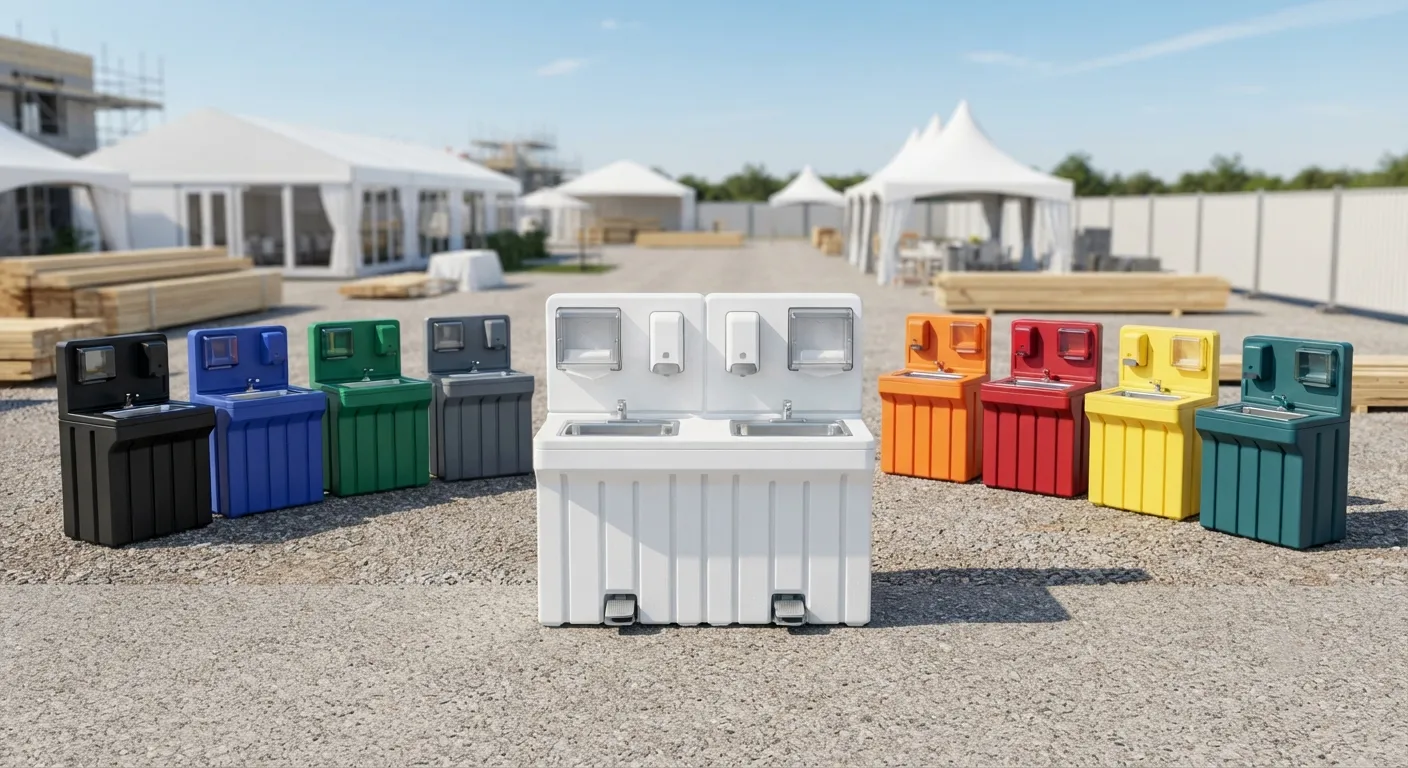
Start with your expected daily gate, not the total weekend attendance, since that is what drives line length at 2pm on a Saturday. Cincinnati Porta Pros sizes most county fairs using the porta potty rental baseline of one unit per 75 to 100 attendees, then adds units for beer gardens, livestock barns and grandstand seating where lines cluster. A fair drawing several thousand people over a weekend often needs a mixed setup: standard units for general grounds, at least one ADA accessible unit per restroom cluster, and a restroom trailer near the main stage or exhibit hall for higher-traffic hours. ADA Standards section 213.2 requires that where single-user portable units are grouped, at least 5 percent of the cluster be accessible, with a minimum of one unit regardless of cluster size. That rule applies to every fairground layout we build in Cincinnati, whether it is three units by a livestock barn or twenty units lining a midway. Use our porta potty placement guide to walk the grounds before the trucks arrive. If your fair runs food vendors, pair restrooms with a handwashing station rental near every booth, since fairgoers expect a sink close to the funnel cake stand, not a walk across the grounds.
What restrooms work best for a multi-day fair?
Multi-day fairs in Cincinnati do best with a mix of standard units for volume and one or two upgraded options for VIP areas, sponsors, or the grandstand. A deluxe flushable porta potty gives sponsors and fair board guests a step up without the cost of a full trailer. For larger county fairs with a grandstand concert or a beer garden running late, a 4 stall restroom trailer or 8 stall restroom trailer handles sustained traffic better than a wall of standard units, and it holds up through a full weekend without mid-day servicing gaps. Every unit on the grounds, standard or trailer, needs to meet OSHA 1926.51(c), which sets toilet ratios by headcount for work crews on site, including the vendors, security staff and grounds crew running the fair itself, separate from public attendance. A standard unit holds a 60 to 70 gallon tank, which matters for multi-day events since it sets how many service visits you will need before the gates open again. ANSI/PSAI Z4.3 sets a baseline service interval of once per week for up to 10 users over a 40 hour week, but a fair drawing thousands over three days needs a tighter schedule than that baseline, which is why we build a custom service plan instead of applying a generic interval. Compare options on our event restroom rental page before you commit to a count.

Where should restrooms go on the fairgrounds?
Place restrooms at the intersections fairgoers already walk through: near livestock barns, alongside the midway, and outside the grandstand gates, not tucked behind a building where nobody sees them until they are searching. ADA Standards section 403.5.1 requires a minimum 36 inch clear width on the accessible route leading to each unit, so gravel lots and grass fields need a stable path, not just proximity. ADA Standards section 302.1 requires that the ground surface itself be stable, firm and slip resistant, which rules out soft mud near a livestock wash station as a placement spot. A roll-off delivery for grounds cleanup needs about 60 feet of straight clearance behind the truck, so plan restroom and roll-off dumpster rental placement together during load-in, not as two separate conversations with the grounds manager. If your fair sits within city limits, confirm placement in the public right of way with the City of Cincinnati before locking in your site map, since that requirement needs confirming locally rather than assumed. Fairs near Norwood, about 5.4 miles northeast, or Fairfield, about 16.8 miles north, follow the same placement logic even where local rules differ slightly. Check our porta potty rental cost page for how placement distance from the road affects delivery pricing.
Pricing for a Cincinnati county fair weekend
| unit | duration | typical price |
|---|---|---|
| standard | weekend | $250 |
| ada | weekend | $240 |
| deluxe | week | $250 |
| trailer | weekend | $2,000 |
| dumpster | weekend | $440 |
See our porta potty rental per day page for single-day fair bookings, or the monthly porta potty rental page if your fairgrounds run a longer seasonal event.
How far in advance should I book restrooms for a fair?
Book as soon as your gate estimate is set, ideally 60 to 90 days out for a multi-day county fair. Fair season overlaps across Cincinnati and nearby towns like Mason, 22.3 miles northeast, so trucks and units get reserved early. Request a firm count through our request a quote page.
Do we need ADA-accessible units for a county fair?
Yes. ADA Standards section 213.2 requires at least 5 percent of any restroom cluster to be accessible, with a minimum of one unit no matter how small the cluster. See our ADA restroom requirements guide for cluster planning across a full fairground layout.
Can we add handwashing stations near food vendors?
Yes, and most fair boards do. A portable sink rental placed near each food booth cuts lines at shared restroom sinks and meets attendee expectations at a food-heavy event.
What happens if we underestimate attendance?
Call for emergency delivery. Cincinnati Porta Pros keeps standard units in reserve for county fairs that draw more than expected; see emergency porta potty rental for same-day options if the gate count runs past your plan.
Do county fairs need dumpsters too?
Most do, especially with food vendors and livestock areas generating steady waste. Pair restrooms with a 10 yard dumpster rental or larger unit depending on vendor count and grounds size.
Next step
Get a delivery date
Tell us the address, the dates and the headcount. We size the order and confirm the route.