
How many restrooms does a farm crew need?
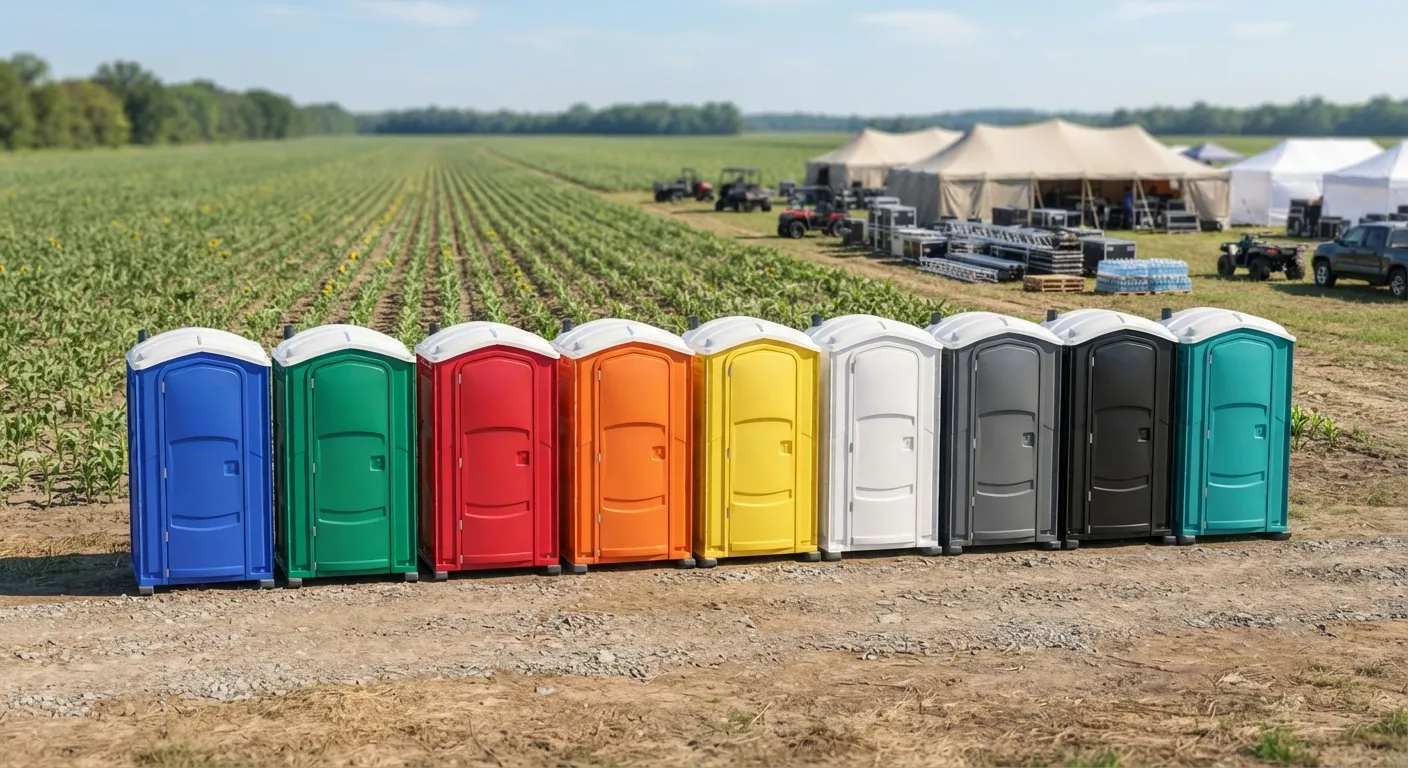
OSHA 1928.110 sets the baseline for agricultural field sanitation: one toilet and handwashing facility per 20 hand-labor employees, and it has to sit within a quarter mile walk of where people are working. That is not optional if you have hired crews picking, weeding or packing. A construction crew on the same property falls under a different rule, OSHA 1926.51(c), which uses a similar headcount ladder but no distance requirement. If you are running both a barn renovation and a harvest crew at once, you may need two different counts on the same property. Cincinnati Porta Pros can walk your acreage and figure the right number before delivery, whether that means one standard portable toilet tucked near the loading area or a row of units spread across multiple fields. Distance matters more on a farm than almost anywhere else we deliver, since a quarter mile on rough ground takes longer to walk than a quarter mile on pavement. For crews spread across a large parcel outside Cincinnati proper, ask about placing multiple stations rather than one central bank of toilets, since that keeps every worker inside the required walk. If you need a rough headcount first, our porta potty calculator page walks through the math before you call.
What kind of restroom fits a farm site?
Most farms do fine with a standard unit: a 60 to 70 gallon holding tank, about 44 by 48 inches on the ground, and roughly 92 inches tall, which fits at the end of a row or beside a barn without blocking equipment. If you have office staff, packing shed workers or family living on site, a deluxe flushable unit adds a sink and flush action for a few dollars more a day. Farms hosting agritourism, a pumpkin patch or a fall festival draw a public crowd that expects more than a field toilet, and that is where a restroom trailer or a portable sink rental earns its keep. Handwashing is worth separating from the toilet question. If your crew is applying pesticides or herbicides, OSHA 1926.51(f)(1) requires washing facilities for that work, and a sink placed near the mixing station covers it better than one placed by the toilets. General crews still need water under OSHA 1926.51(a)(1), and any handwashing station has to carry soap and towels or a hand dryer per 29 CFR 1910.141(d)(2); hand sanitizer alone does not meet it. A handwashing station rental solves both needs at once, delivered right alongside your toilets.

Do farms outside Cincinnati need different service?
Service does not change much once you leave the city limits, but drive time can affect scheduling on a tight harvest calendar. Farms near Mason, about 22.3 miles northeast of Cincinnati, or out toward Hamilton, 20.5 miles north, sit on the outer edge of our normal run and benefit from booking a day ahead during peak season. Closer-in operations near Fairfield, 16.8 miles north, or Norwood, 5.4 miles northeast, are easy same-week adds. Septic service matters here too. Farmhouses and packing sheds on a private system typically need septic tank pumping every 3 to 5 years, driven by tank size and household or crew size, and a busy harvest season with extra hands on site can push that timeline up. Watch for the septic tank warning signs if you notice slow drains in the farmhouse during a heavy work season. If you run a farm stand with a small kitchen, grease from fryers or food prep counts differently: a grease trap gets pumped once fats, oils, grease and solids reach 25 percent of the liquid depth, not on a fixed calendar. Farms hosting weddings or events in a renovated barn should check our event restroom and wedding restroom pages, since public-facing events call for a different unit mix than a field crew does.
| unit | day | week | month |
|---|---|---|---|
| standard | 100-350 | 130-500 | 125-325 |
| deluxe | 85-1200 | 150-290 | - |
| ada | 200-400 | 120-240 | - |
An accessible unit matters if your farm draws public visitors: ADA Standards 213.2 requires at least one accessible unit in any cluster, and it has to meet the 60 inch turning circle in ADA Standards 304.3.1.
How far in advance should I book for harvest season?
Two to three weeks ahead is safest during peak fall harvest, since that is when demand spikes across every farm in the region. Emergency delivery is possible; call our emergency porta potty line if a unit fails mid-harvest.
Can I put a portable toilet right next to the field I am working?
Yes, and it helps compliance with the quarter mile rule in OSHA 1928.110. Ground needs to be level enough for pump-out access; check our placement guide before delivery day so the truck can reach it.
What happens to units in winter on an open field?
Cold weather changes servicing needs but not placement rules. Read our porta potty in winter guide for how freezing temperatures affect tank chemicals and pump schedules on exposed farmland.
Do I need a permit to place a toilet on my own farmland?
Placement on private property is usually simpler than public right of way, but rules vary. Confirm with the city or county before delivery; see our porta potty permit requirements page for what to ask.
Can Cincinnati Porta Pros service multiple fields on one property?
Yes. We route multiple units across a single farm on one visit, which keeps every crew within the required walking distance without multiplying service calls or delivery fees.
Next step
Get a delivery date
Tell us the address, the dates and the headcount. We size the order and confirm the route.