
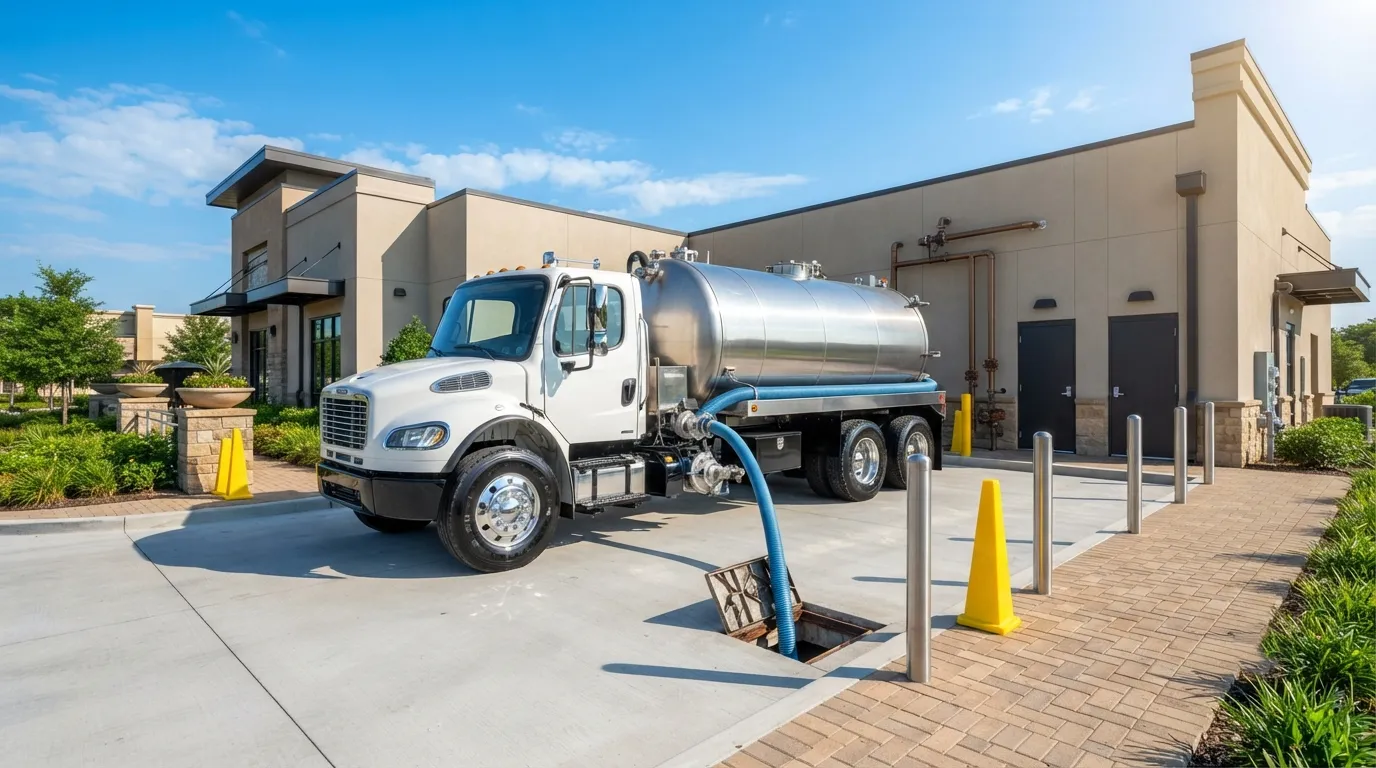
What Is Grease Trap Pumping and Why Does It Matter?
A grease interceptor sits between your kitchen drains and the sewer line, catching fats, oils and grease before they leave the building. Left alone, that layer thickens fast in a busy Cincinnati kitchen. The bank figure is firm: once FOG and solids reach 25 percent of the liquid depth, the trap needs to be pumped, not scraped or dosed with enzymes. Skip that point and grease starts moving downstream into pipes it was never meant to reach, which is how a restaurant ends up with a backup during dinner service instead of a scheduled visit. This is a different service than septic pumping service for a home tank, though the crew and the truck often overlap. If your kitchen also needs handwashing setups during a remodel or a temporary kitchen build, handwashing station rental covers that separately. Grease trap work pairs naturally with broader facility upkeep, similar to how septic tank cleaning fits into a property's maintenance cycle rather than standing alone.
How Often Does a Commercial Grease Trap Need Pumping?
There's no single answer that fits every kitchen, but volume and trap size drive the schedule more than the calendar does. A high-volume fryer station in a downtown Cincinnati restaurant fills faster than a small cafe in Norwood, 5.4 miles northeast, running a lighter menu. For comparison, a residential septic tank is typically pumped every 3 to 5 years, driven by tank size and household size, which is a far longer interval than most commercial traps ever see. Commercial grease trap pumping services near me usually run monthly or quarterly for full-service kitchens, and tighter for anything frying at volume. Waiting too long risks the same kind of slowdown covered in septic tank warning signs, just moved from the leach field to the kitchen line, and it is worth reviewing alongside grease trap pumping scheduling basics and general construction site services planning. If your facility also handles wastewater from a holding tank setup, holding tank rental is worth pairing with your pumping schedule so nothing overflows between visits.

What Does Grease Trap Pumping Cost in Cincinnati?
Cost depends on trap size, access and whether it's a routine visit or an emergency grease trap pumping call after hours. Here's what a standard septic-style pump-out runs, based on our measured pricing data:
| Service | Duration | Typical Range |
|---|---|---|
| Septic/grease pump-out | Day rate | 150 to 300 dollars |
| Septic/grease pump-out | Weekend | 50 to 150 dollars |
A weekend emergency call sits in a lower band than a scheduled weekday day-rate job in this dataset, so ask which category your job falls under before booking. Kitchens near Fort Thomas, 7.9 miles southeast, or Covington, 11.2 miles south, fall inside our regular service radius, and drive distance can affect the final quote, similar to how quotes shift across our broader service areas. For dumpster needs tied to a kitchen renovation, see roll-off dumpster rental or check dumpster rental cost for current bands. If your build also needs a portable restroom on site, portable restroom rental and construction site services cover that side of the job.
Do I need a permit for grease trap pumping in Cincinnati?
Permit rules vary by property and use, and we have not verified a specific Cincinnati ordinance for grease trap disposal. Confirm requirements with the city before scheduling if you're unsure. For general portable sanitation permitting questions, porta potty permit requirements covers the parallel process.
How fast can you get here for an emergency grease trap pumping?
Response time depends on your location and current job load. Kitchens closer to central Cincinnati typically see faster turnaround than sites near Mason, 22.3 miles northeast, and the same distance logic applies to our emergency porta potty rental dispatch. Call ahead for same-day emergency slots. For non-grease emergencies, see emergency septic service.
What size grease trap do I have?
Trap size depends on your kitchen's plumbing and fixture count, set at installation, much like unit counts on a job site follow the guidance in how many porta potties do I need. Check your building plans or ask a licensed plumber to confirm gallon capacity before your first pump-out.
Can grease trap waste go in a regular dumpster?
No. Grease trap waste is liquid and semi-solid FOG material, handled through vacuum pumping, not solid waste disposal. See what cannot go in a dumpster for what belongs in roll-off containers instead, and check dumpster weight limits or dumpster permit requirements before you load one for a kitchen cleanout.
Does Cincinnati Porta Pros handle both restaurants and septic tanks?
Yes. Cincinnati Porta Pros runs both commercial grease trap pumping and residential septic pumping, often on the same truck route. Ask about bundling a scheduled visit with septic tank pumping cost if you manage both, and request a combined quote through request a quote or our contact page.
Next step
Get a delivery date
Tell us the address, the dates and the headcount. We size the order and confirm the route.