
How fast can disaster relief sanitation be set up in Cincinnati?
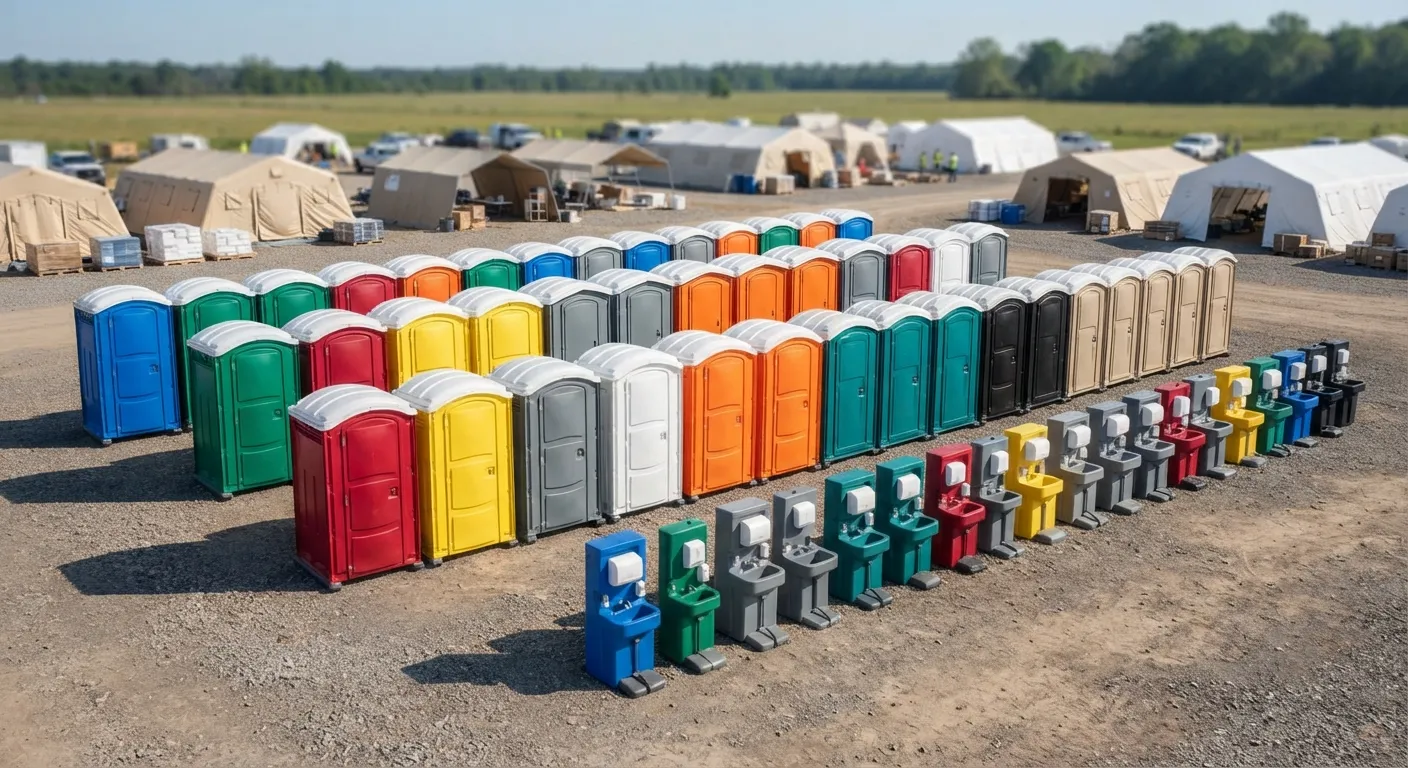
Speed depends on how many units the event needs and how the roads look. A single-household emergency, like a failed septic line after heavy rain, often gets a portable restroom rental delivered same day. A larger response, say a shelter set up after storm damage, needs a site plan first: how many people, how many hours a day, and whether the location has temporary power pole service or is running dark. Cincinnati Porta Pros treats disaster calls as emergency porta potty rental work, which means the dispatch board gets cleared for it. For agencies coordinating a response across Hamilton County, that often means placing units at a staging point in Cincinnati and then redistributing to Norwood, 5.4 miles northeast, or Fort Thomas, 7.9 miles southeast, as shelters open. OSHA 1926.51(c) sets the baseline for toilet counts on any worksite, including debris-removal crews and relief workers, at one unit for every 20 people, and that ratio is the starting math for any shelter or staging area, not just construction. If the site also handles fuel, herbicide or coating cleanup work, OSHA 1926.51(f)(1) requires washing facilities beyond a basic toilet. Ask about the porta potty rental checklist so nothing gets missed under pressure.
What kind of units work best for disaster response?
Standard units cover most shelter and staging needs, and pricing runs from a single day up through a month depending on how long the response lasts.
| unit | day | week | month |
|---|---|---|---|
| standard | $100 - $350 | $130 - $500 | $125 - $325 |
| ada | $200 - $400 | $240 - $500 | - |
| dumpster | $51 - $112 | $426 - $778 | $800 - $2500 |
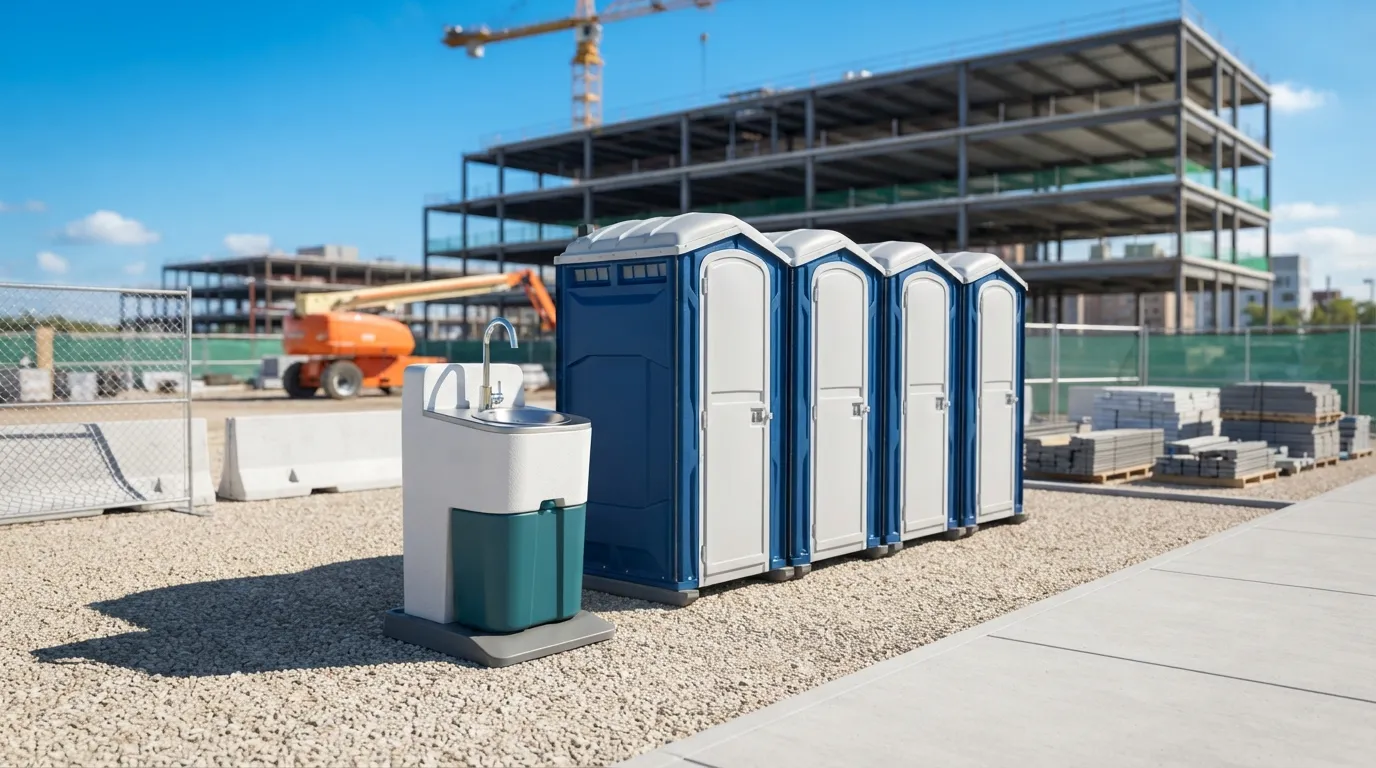
A standard porta potty rental has a 60 to 70 gallon holding tank, stands about 92 inches tall, and needs roughly 44 by 48 inches of ground space, which fits most parking lots and staging areas without trouble. Shelters serving people with mobility limitations need at least one ADA accessible porta potty per cluster of units, per ADA Standards section 213.2, and the unit itself needs a 60 inch turning circle under section 304.3.1 and a 32 inch clear door opening under section 404.2.3. Debris cleanup almost always means a roll-off dumpster rental parked alongside the restrooms, and that truck needs about 60 feet of straight clearance behind it to place the box. If the response runs past a few days, a monthly porta potty rental rate usually beats renewing a daily order, and if water service is down entirely, a handwashing station rental or portable sink rental fills the gap, since 29 CFR 1910.141(d)(2) requires soap and a way to dry hands, not just a bottle of sanitizer.
Do disaster relief sites need special placement or permits?
Placement rules do not disappear just because the situation is urgent, but they do get worked out fast when a city department is coordinating the response directly. Whether a shelter site sits in the public right of way or on private lot space affects what is allowed, and that needs confirming with the city rather than assumed from a normal job site plan; see the porta potty permit requirements page for how that conversation usually goes. Ground conditions matter too. ADA Standards section 302.1 calls for a stable, firm, slip-resistant surface, which after a flood might mean gravel or plywood pads laid down first. Access paths need to stay clear at 36 inches per section 403.5.1 so people using wheelchairs or mobility aids are not boxed out. If the disaster response covers a wide radius, Cincinnati Porta Pros can stage from a central Cincinnati yard and reach outlying spots like Covington at 11.2 miles south or Florence at 17.1 miles southwest without a second mobilization. For sites also managing storm debris or downed trees, pair the sanitation order with a construction dumpster rental and check what cannot go in a dumpster before crews start loading, since contaminated debris and certain hazardous materials cannot go in a standard box. A temporary fence rental also helps secure a staging area overnight when the site is unmanned.
How many portable toilets does a shelter need?
Use one unit per 20 people as a baseline, following OSHA 1926.51(c), then add at least one accessible unit per cluster under ADA Standards 213.2. A shelter housing 100 people needs five standard units minimum, plus an ADA unit. See how many porta potties do I need for the full breakdown.
Can Cincinnati Porta Pros deliver the same day during an emergency?
Often yes, especially for a handful of standard units. Larger disaster response orders, like 20 or more units for a shelter, take a bit more lead time to route trucks and confirm the site can take them. Call ahead through request a quote as soon as the need is known.
What happens to septic systems damaged by flooding?
A flooded septic system may need pumping sooner than its normal 3 to 5 year cycle, especially if the tank took on groundwater. Cincinnati Porta Pros runs emergency septic service for exactly this, and a septic tank cleaning afterward clears out floodwater sediment.
Do relief workers need handwashing stations separate from the toilets?
Yes, if crews are handling contaminated debris, fuel, or applying any coatings or treatments, OSHA 1926.51(f)(1) requires washing facilities beyond what a toilet unit provides. A standalone hand sanitizer station rental does not meet that requirement by itself.
Is temporary power needed alongside sanitation units?
Not always, but shelters and staging sites without grid power often add a light tower rental and temporary power pole for overnight safety and to run a handwashing station pump.
Next step
Get a delivery date
Tell us the address, the dates and the headcount. We size the order and confirm the route.