
How do porta potties work?
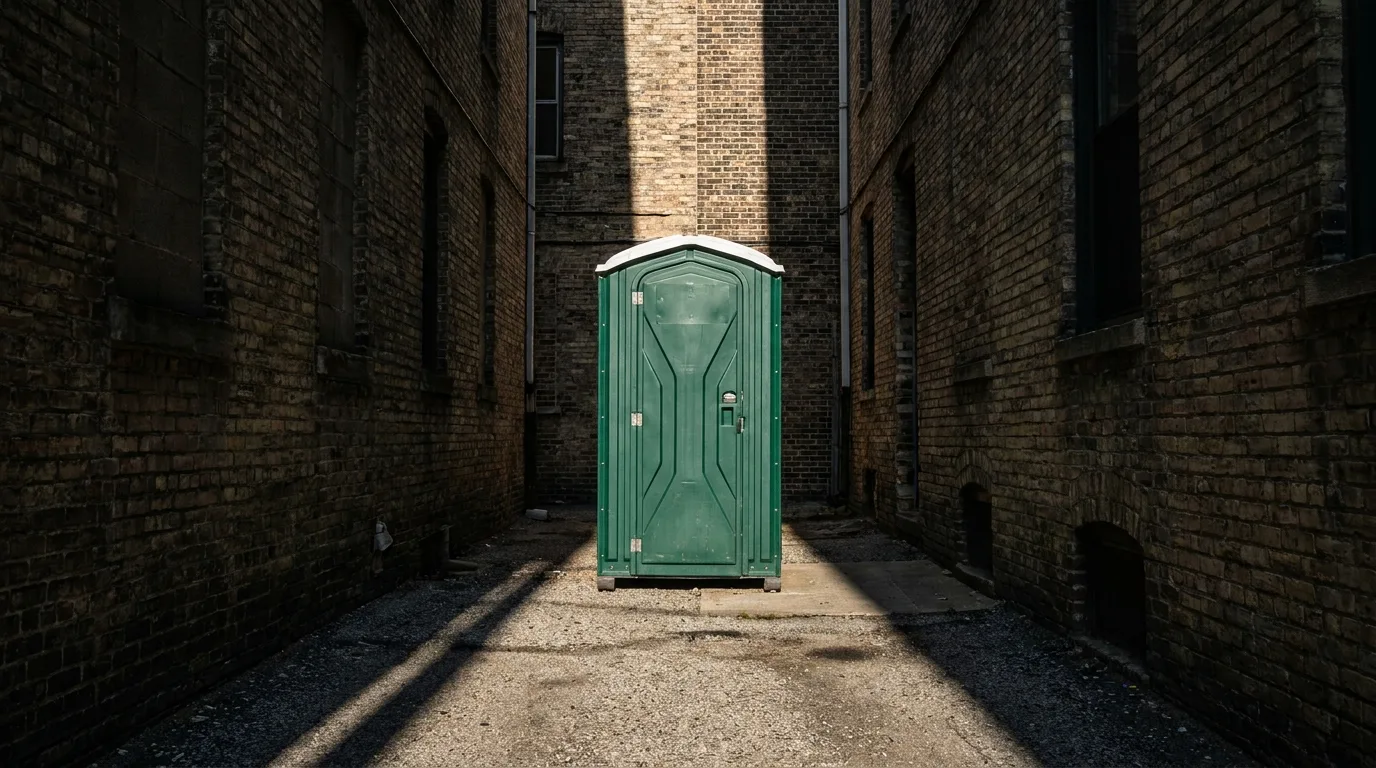
Under the seat sits a holding tank, usually 60 to 70 gallons on a standard unit, built into a base about 44 by 48 inches on the ground and standing roughly 92 inches tall. Waste drops straight into the tank. There is no flush, no water line, nothing to freeze or back up in a normal setup. A chemical packet, the same blue liquid you smell walking up to one, sits in the tank and starts breaking down solids while it knocks down the smell. That is the "portable toilet chemicals near me" people search for. It is not bleach and it is not harsh. Our trucks pump the tank on a set route, usually weekly under the baseline interval described in ANSI/PSAI Z4.3, and top off the chemical each visit. A construction worker running to a porta potty on break does not think about any of this. That is the point. If you are trying to figure out how many units a crew actually needs, the math is laid out on our how many porta potties do I need page, and OSHA's actual ratios are on our OSHA portable toilet requirements page.
How do flushable porta potties work?
A deluxe flushable porta potty adds a small onboard freshwater tank and a foot pump or hand lever that pushes a splash of water through the bowl after each use. It still drains to the same kind of holding tank underneath, just built for more comfort. These units run higher than a standard rental, and pricing sits in its own band you can check on our deluxe flushable porta potty page or the general porta potty rental cost breakdown. Weddings, corporate events and anything with a dress code tend to book these over a basic unit. If you need something closer to a real bathroom, a restroom trailer rental plumbs into a fresh water supply and a separate waste tank, with sinks that run on demand rather than a foot pump. Cincinnati venues booking for wedding restroom rental or event restroom rental jobs usually step up to a trailer once guest counts climb, since ADA Standards section 304.3.1 calls for a 60 inch turning circle inside accessible units, which a trailer stall handles more comfortably than a standard box.

How does a portable sink work?
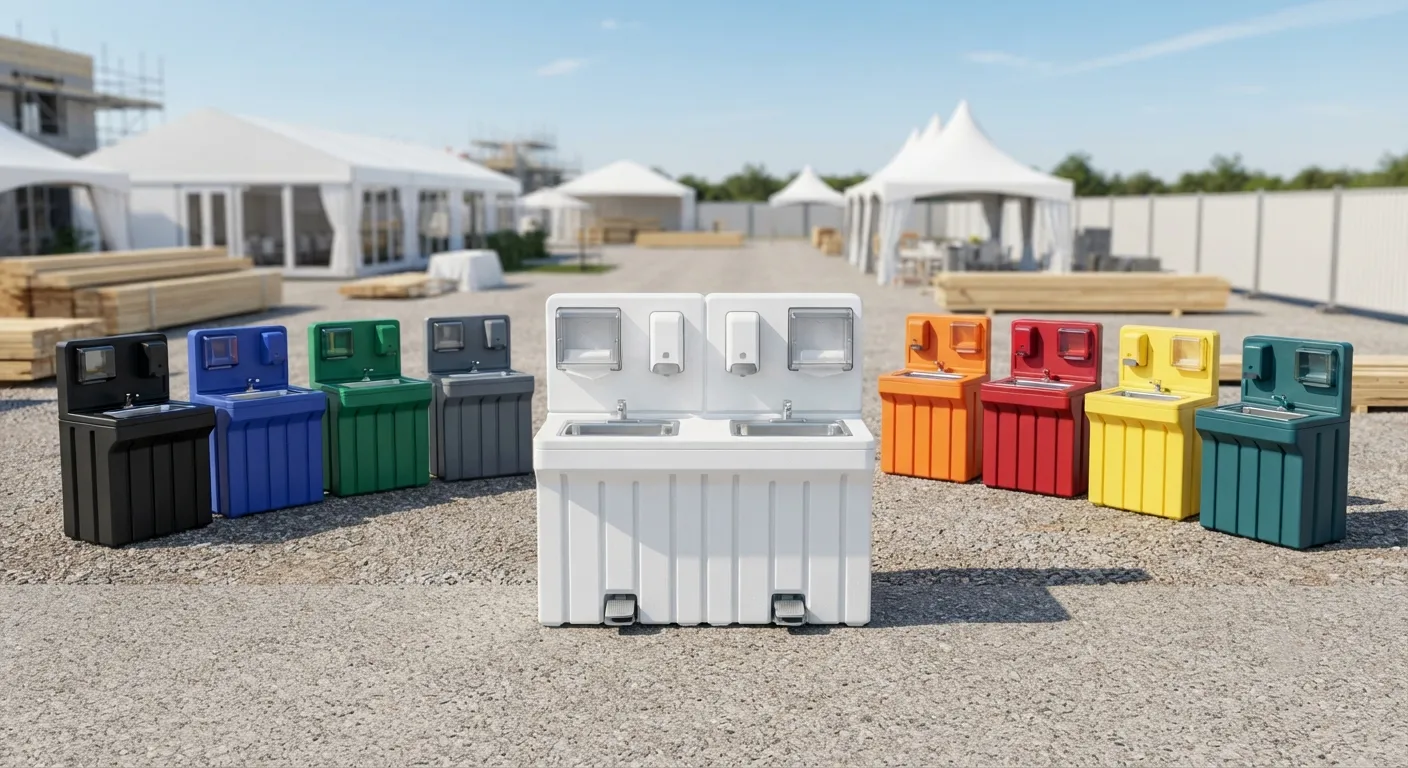
A portable sink rental or handwashing station carries its own fresh water tank, a foot pump to move water to the faucet, and a gray water tank underneath to catch runoff. No hose bib required. Soap and paper towels sit in a dispenser mounted to the unit, which matters more than people think: 29 CFR 1910.141(d)(2) requires washing facilities to be stocked with soap and towels or a hand-drying device, and hand sanitizer alone does not satisfy that. If your crew is applying paint, coatings, herbicides or insecticides, OSHA 1926.51(f)(1) specifically requires washing facilities for that kind of contaminant exposure, not just a general handwashing station. Farms around Cincinnati hiring hand-labor crews should also know OSHA 1928.110 calls for a handwashing setup within a quarter mile walk of the work area. We stock stations built for both cases; see handwashing station rental or the specific handwashing requirements page for what applies to your site.
Do camping porta potties work the same way?
Basically yes, just smaller. A camping porta potty is a scaled-down version of the same sealed-tank, chemical-treated design, meant for a weekend rather than a month on a job site. No water needed, which is why they show up at camping porta potty setups, hunting camps and small backyard gatherings around Cincinnati. For anything bigger than a weekend, a standard rental from porta john rental is more practical and the tank capacity holds up better under repeat use. If your event needs an accessible unit, remember ADA Standards section 213.2 requires at least one accessible unit in any cluster of standard units, and our ADA accessible porta potty page covers what that unit includes, including the 32 inch minimum clear door opening under ADA Standards section 404.2.3.
Pricing by unit and duration
| unit | day | week | month |
|---|---|---|---|
| standard | $100 - $350 | $130 - $500 | $125 - $325 |
| ada | $200 - $400 | $240 - $400 | - |
| deluxe | $85 - $1200 | $150 - $290 | - |
Delivery fees run separately, typically $100 to $500 for a single day or $120 to $420 for a month-long placement. Check porta potty rental per day or monthly porta potty rental for the full picture on what is included.
How often does a porta potty get pumped?
Under ANSI/PSAI Z4.3, the baseline is one service visit per week for up to 10 users across a 40 hour week. Busier sites, festivals or multi-crew job sites need more frequent pumping. See how often are porta potties cleaned for scheduling specifics.
Do porta potties smell?
A properly serviced unit shouldn't smell much past the first few seconds. The chemical treatment and regular pump-outs are what keep odor down; skipped service is almost always the cause when a unit smells bad. Full details are on do porta potties smell.
How many porta potties does a construction site need?
OSHA 1926.51(c)(1) sets the ratio: one toilet for 20 workers or fewer, then one toilet and one urinal per 40 workers up to 200. Our construction site services page and how many porta potties do I need guide walk through the math for your crew size.
Where can porta potties be placed on a job site?
Placement depends on ground stability, ADA Standards section 302.1 requiring firm and slip-resistant surfaces, and clearance for the service truck. Our porta potty placement guide covers layout, and permit rules should be confirmed directly with the city before final placement.
Is a septic tank different from a porta potty tank?
Yes. A residential septic tank is a fixed underground system typically pumped every 3 to 5 years depending on tank size and household, while a porta potty tank is portable and serviced weekly. See septic pumping service or how often to pump a septic tank for the septic side.
Next step
Get a delivery date
Tell us the address, the dates and the headcount. We size the order and confirm the route.